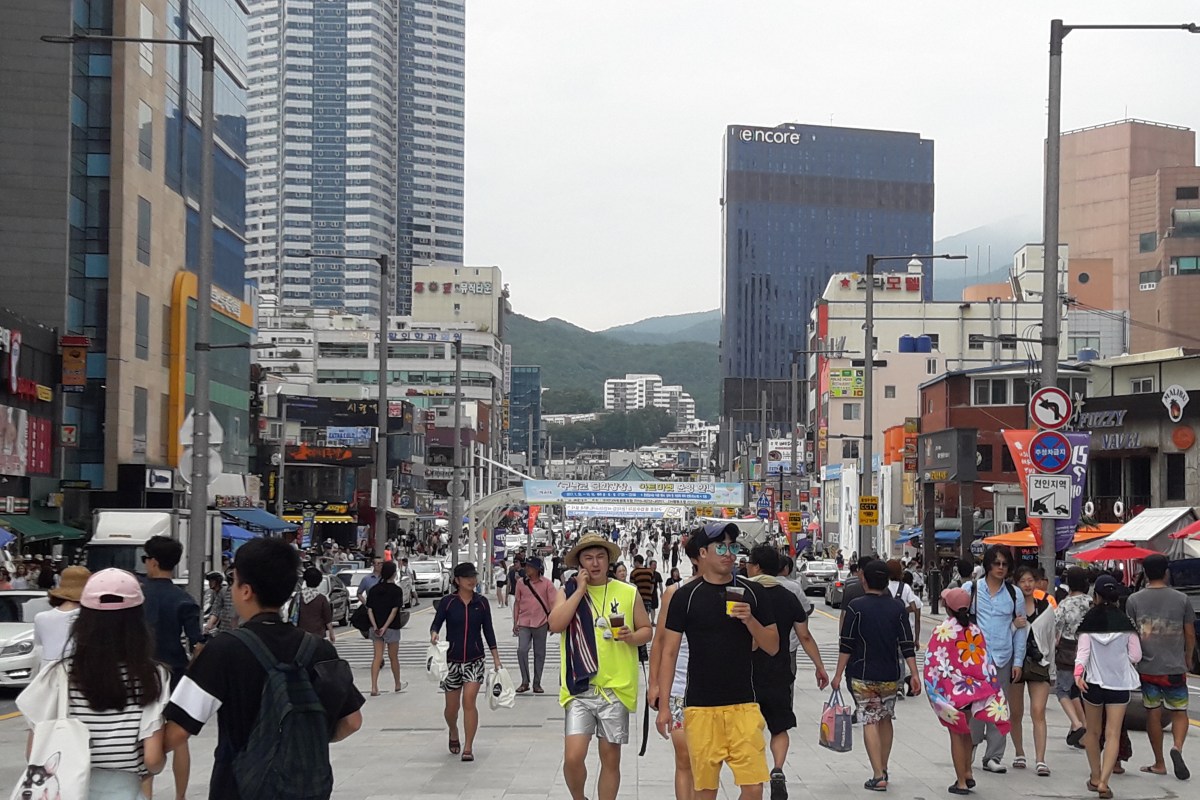
Weekend in Busan

Intro to Busan

My brief visit to Busan for the Holi Hai festival in March perked my interest in the city, and I knew that it warranted a longer visit during peak summer season. So, while I had two days off from work at the end of this July, I headed to Busan for a long weekend!

Busan is South Korea’s second most populous city and its busiest port, a hub of activity on the southeast coast. It’s known for Haeundae Beach, the country’s largest, it’s raw seafood markets, and boasts the world’s biggest department store. Though it’s on the opposite side of the country from Seoul, a ride on the speedy KTX train will only take about 3 hours and set you back about 45 bucks. There are also cheaper train options that take less direct routes.

Haeundae Beach

I ended up staying at an excellent hostel called The New Day in Haeundae Beach. The location was ideal – it was right next to the subway station and main avenue, but removed from the craziness of the boardwalk’s epicenter. It was a calm haven away from the noise.

The staff was welcoming and helpful, and everything inside was clean and well-organized. In addition to the kitchen and main lounge, they had two more lounges on separate floors! This included a living-room style area, with artwork, board games, and a piano, in addition to a rooftop garden. It stands in my memory as one of the best hostels I’ve stayed at in a city center.


I wanted to stay in Haeundae to be in the center of the action. I knew I was heading to Korea’s most famous beach in the dog days of summer, but the magnitude of the crowds still took me back. Korea’s efficiency extends even to the beach, and not without good reason. Parasols, beach blankets, and tubes are set up in vast geometric rows. Fried chicken vendors roam the grid of umbrellas, ready to cater to hungry beachgoers. In the water, an armada of inner-tubers ride the waves together. There’s not a ton of elbow room, but that’s to be expected in Korea, and I like to think of it as just a chance to meet friendly beach neighbors.
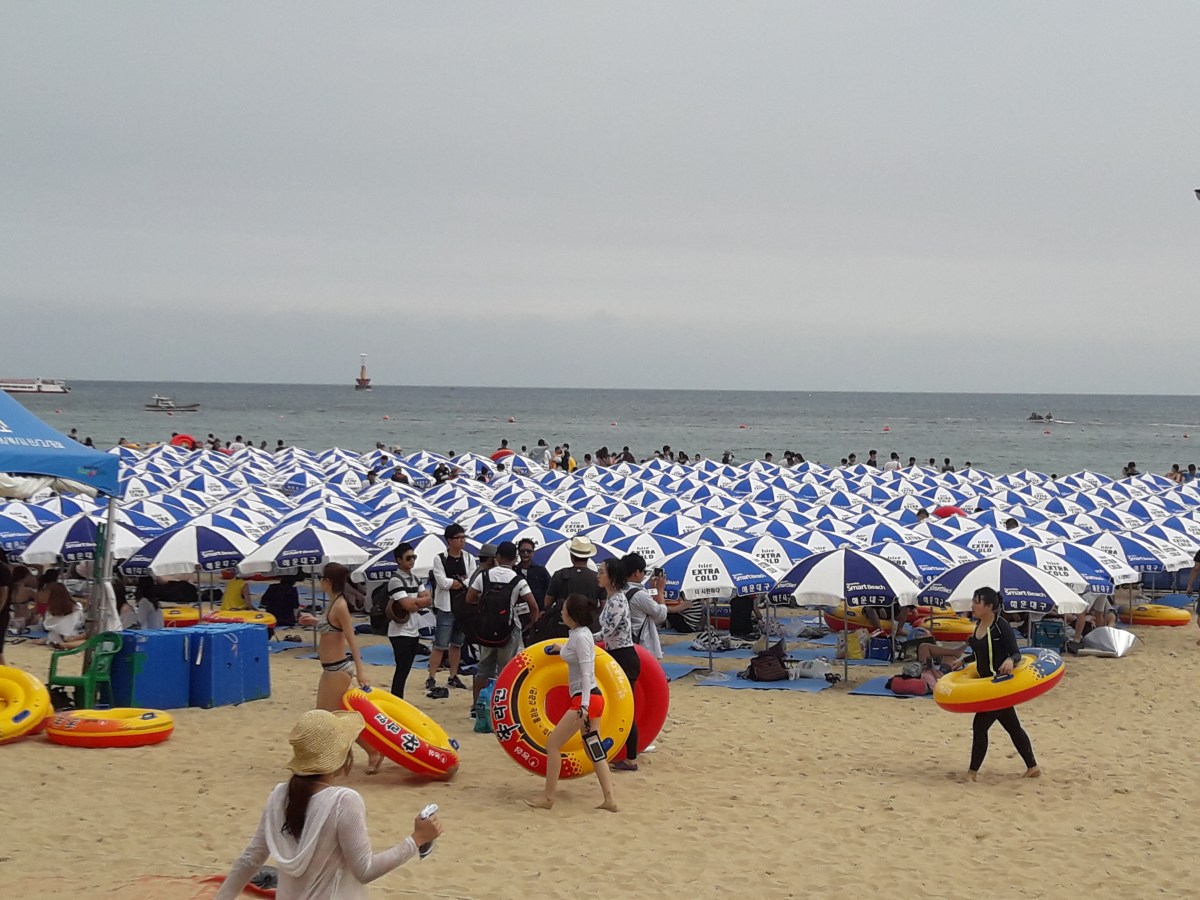
 

Haeundae 1


Gwangali Beach is another nice option if Haeundae is not quite your speed. I found it had fewer crowds and a calmer current.
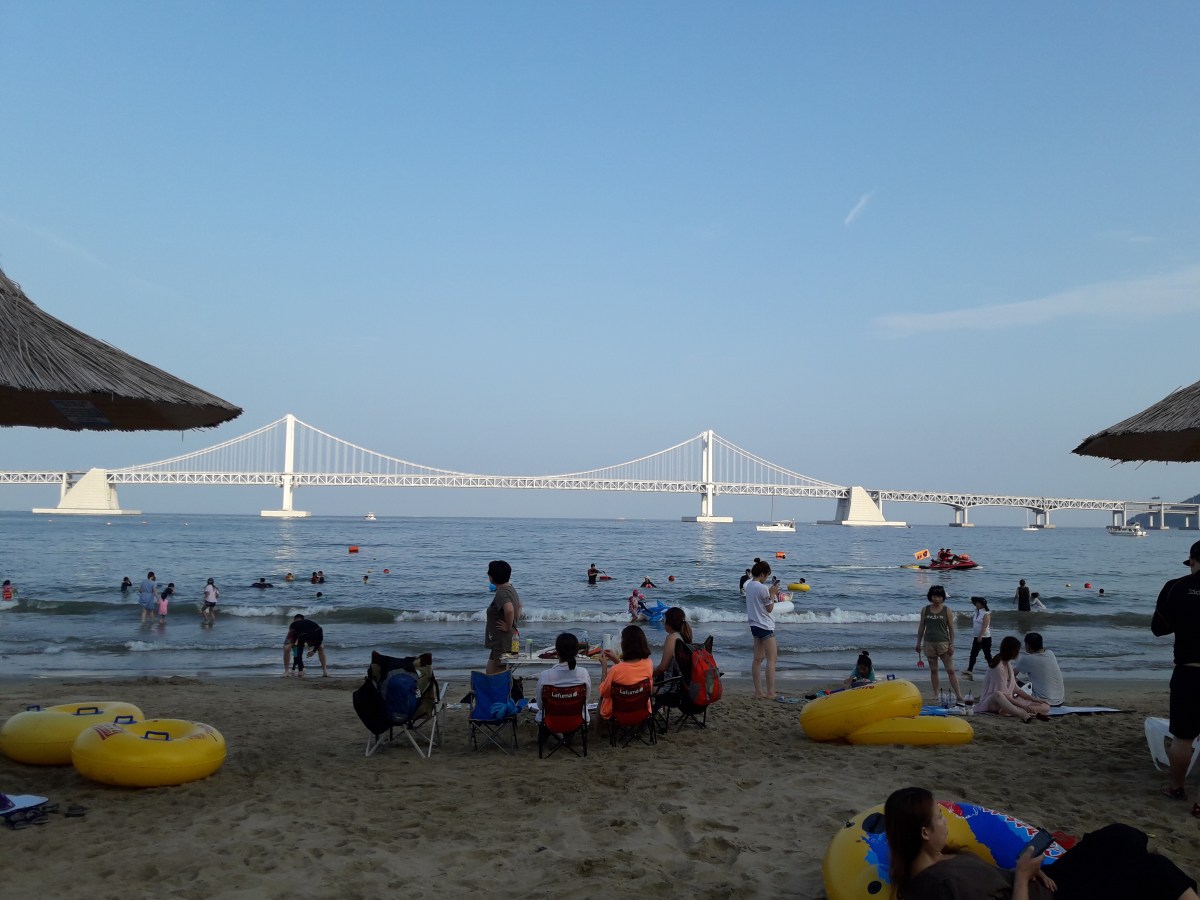
 

Gwangali 1


The energy at Haeundae doesn’t stop once the sun goes down. In fact, it’s only gearing up. The main avenue is filled with restaurants, market stalls, and street food through the night.


The hotspot of action was at the boardwalk along Haeundae. Set against the backdrop of the ocean, with skyscrapers rising on the other side, the energy is infectious. People wander the walkway until the early hours of the morning. Street performers dot the intersections. Here a few of my favorites – the immobile blue man and two folk singer sisters. (Don’t worry, I tipped!)

The capstone of my Saturday night was joining in a 2 am beach volleyball game with some employees of the Pakistani and Turkish Embassies in Seoul. We came from disparate parts of the globe, but here in Korea, we were all equally foreigners, which created an instant bond! It’s another thing I like about being a foreigner in Korea.

Beomeosa and the Geumgang Park Cable Car

On another note, it would be inaccurate to assume that Busan is only a downtown beach scene. There are other nature-oriented attractions in the city as well, which I made a point to visit.

My primary target was Beomeosa, one of Busan’s most prominent Buddhist temples. Getting there is pretty easy – take the subway Line 1 (Orange Line) to the second to last stop, Beomeosa. Between exits 5 and 7, walk up a road with a small hill, past traditional restaurants and shops, to the bus 90 stop. Bus 90 will take you to the temple entrance in minutes.

Beomeosa resides on the slopes of Geumjeong Mountain. At the summit of a mountain, legend tells of a golden well with water that never runs dry. A heavenly fish is said to reside there, granting this mystic property. I didn’t find the golden well, but I did feel calm and contemplative at the temple, a welcome respite from the city. The green-lined entryway led me in, and I worked my way through the different temples in the complex.


In many of the temples, worshipers were praying to buddha statues on intricate shrines, and photography was forbidden.

One aspect of buddhist temples I find particularly interesting are the Four Heavenly Kings, gods who watch over the four cardinal directions. These imposing figures stand in the gates of many Buddhist temple complexes. In Korean, they’re called 천왕 (Cheonwang). They are said to guard the world from evil and serve to focus visitors’ thoughts upon entering the temple.
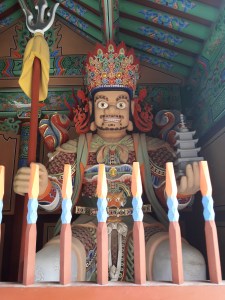
North King

The king guarding the north is chief among the Cheonwang. He holds a pagoda or umbrella and rules over the rain.
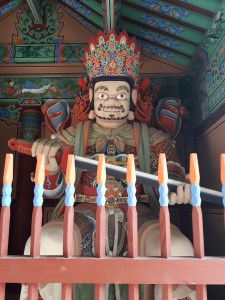
South King

The southern king carries a sword and rules over the wind. It is he who causes all things to grow.
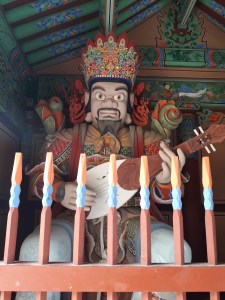
East King

The guard of the east is peaceful and carries a pipa, a four-stringed instrument similar to the lute. He spreads harmony through music and controls the wind, thunder, and lightning.
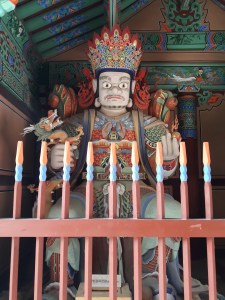
West King

Finally, the western king. He’s my favorite because I’m drawn to his signature symbols – he holds a dragon in one hand and a red jewel or pearl in the other. He sees all from his post in the heavens.

The other major nature-based spot I wanted to hit in Busan was the Geumgang Park Cable Car. To get there, I rode the subway Oncheonjang on the Orange Line (just a few stops from Beomeosa) and took a quick three dollar cab ride to the park entrance.

I’d definitely recommend the cable car as a great way to rise above the density of the city and absorb the view. For 8,000 won, you get a round-trip ticket to the top of Geumjong mountain. At the upper cable car base, there’s a cafe with Korean snacks and drinks, and trailheads leading around the mountain fortress site. I didn’t have time to explore all the hiking trails extensively, but for a break from the city, it can’t be beat.
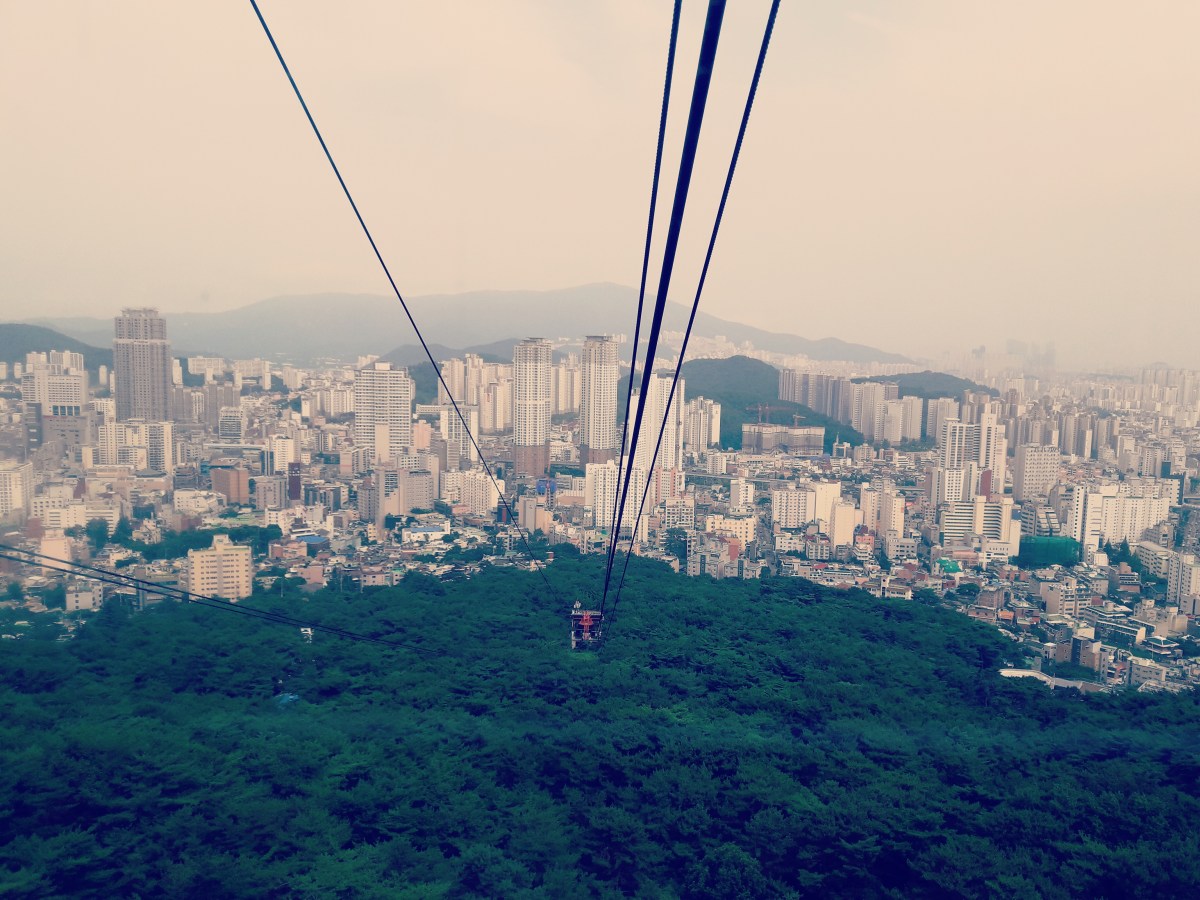
 

Cable Car 2


Busan’s other famous attraction is the Gamcheon Culture Village, a collection of colorful houses and cafes built into the hillside near Toseong. For my next trip to Busan, it’s at the top of my list!

As for my overall impression of Busan, I will say this – it is a major bustling city, so if you’re looking for a peaceful, isolated beach getaway, it may not be your best bet. However, Busan has much to offer in terms of its coastal nightlife, seafood, and temples. It’s a can’t-miss on a trip around Korea. I’ve only scratched the surface so far, and I’m ready to delve deeper next time!


Originally published on the Teach ESL Korea Blog
Western Eyes, Korean Sights

By now, I have a few months in Korea under my belt. However, I never made a proper post about my first impressions of the country. That’s what this topic covers – what differences have I noticed the most about Korean society, coming from an American perspective?

I wouldn’t quite call it culture shock – my transition to Korea was nearly as seamless as I could hope. These are some nuances that I’ve come to appreciate and contrast with my home country. Of course, bear in mind that this is just one person’s opinion, and it can’t accurately describe all of Korea in one sweep. This is just what has stood out most to me. Overall, I’ve found Korea to be an incredibly efficient, sleek, and courteous nation.

Efficient

Korea is nothing if not efficient. The country has developed at an astounding rate since the calamities of Japanese occupation and the Korean War. This would not have been achievable without some serious efficiency, and I notice it in a multitude of small things throughout daily life.

First, the public transport. Coming from the U.S., it blows my mind how cheap, efficient, and speedy transport is here. The Seoul metro system consists of 20 lines that encircle the metropolis, some sprawling out up to 100 km away from the city center. For just around the equivalent of $2, I can take the subway all the way from my home in Suwon to Seoul in a bit over an hour. If I’m in an even greater hurry, I can take an above ground train with a comfortable seat, shaving my time in half, and spend only $4.

I remember, I couldn’t wait until I turned 16 (and three months) to get my driver’s license and taste freedom on the American roads. Now, however, I laugh to myself at how easy it is not to have a car, and move around the entire Seoul area cheaply, quickly, and safely.

Restaurants tend to be efficient in design and function as well. One of the favorite after-gym spots among my friends and I is a fast-food restaurant we’ve fondly dubbed “The Touchscreen Place”. You walk in and punch your order on a touchscreen console with detailed pictures, and submit payment to the same machine. It may sound like made-to-order places like Sheetz or Wawa in the U.S., but it feels a lot sleeker. In addition, when I say fast food, I don’t mean some greasy, squashed burgers and fries. You can choose from an assortment of noodle and rice bowls, topped with meat, kimchee, and vegetables.

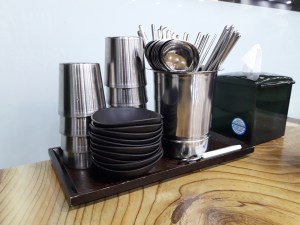
I’ve found the table setup in Korean restaurants is very streamlined as well. Chopsticks, napkins, and teacups come neatly arranged, so you can help yourself without waiting for extras from a server. The silver water cups are also omnipresent, and you can fill up at little machines on your own. This eliminates the need for servers to run around with water pitchers as well (which I appreciate as someone with both consumer and employee experience).

20161215_194458.jpg
All the utensils. So neat, so shiny.

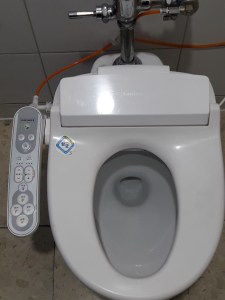
I’ve also noticed that Koreans have solved some problems I didn’t even know I had. Check out this toilet, for example. I’m sure it has all kinds of nifty ways to take care of your business, but I can’t understand enough Korean yet to make use of it.

wp-1486898326255.jpg
I feel like I need a STEM degree just to operate that control console.

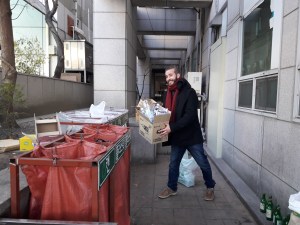
A final note on efficiency – recycling is paramount in Korea. Outside my apartment, there is a collection of bins with no less than 6 compartments for different types of waste. Even using top-notch refuse examination techniques, it took me a while to sort out what goes in which container. Overall, it’s nice to see a country that takes recycling so seriously and I’m happy to do my part.

20161211_154134.jpg
Max was a bit confused on his first trip to the recycling bins.
20170122_132543.jpg
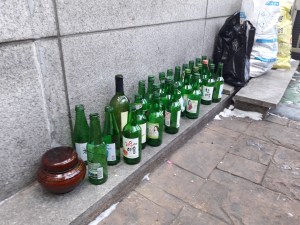
Sometimes you find some interesting remnants of the weekend, like this grand cache of soju bottles!

In short – Korea takes efficiency to a new level. You kind of have to, when you live in a country of 50 million people that’s about the size of Pennsylvania.

Sleek

In Korea I’ve experienced a sense of sleekness that I never really did in the States. Part of this comes from having a more homogenous society – ethnic Koreans make up 96% of the population. Koreans hold themselves to very high standards in terms of presentation – fashion, food, posture, and the organization and tidiness of streets and stores are all things I’ve noticed.

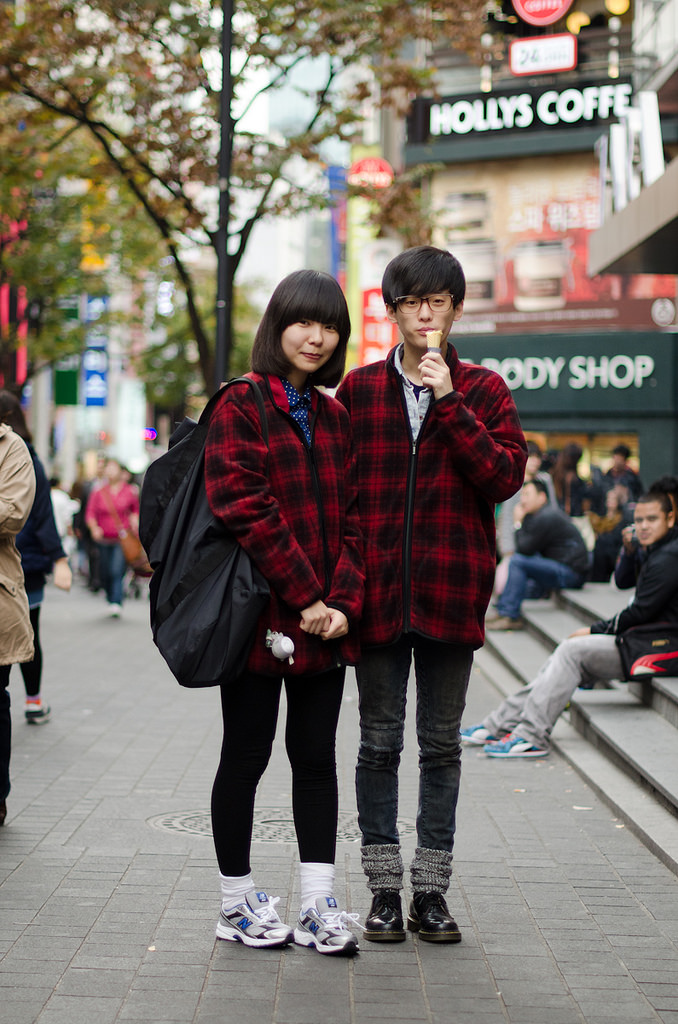
It seems like Koreans hardly leave home without dressing impeccably. During the winter I’ve been here, I’ve seen everyone walking around in long, elegant coats draped over crisp suits and dresses. There’s even a trend of couple clothing, wherein couples wear matching clothing to demonstrate their relationship.

korean-couple

It’s certainly motivated me to step my fashion game up. Some might criticize it as superficial, but I appreciate it in a sense of caring about your appearance and wanting to present yourself well. It also results in an aesthetic society.

One more thing on that string of thoughts – I can probably count on one hand the number of obese Koreans I have seen. Coming from America, it’s a very striking thing to walk around and witness just swaths of fit, slim, well-dressed people. I know the causes and stigmas around obesity in America are a complex issue, but being in Korea makes me wish America would step up its game in terms of taking care of oneself.


Also, as someone who grew up playing with HotWheels and spending hours on Need for Speed video games, I appreciate the care with which Koreans present their cars. When I walk through Ingyedong at night, the busy restaurant and nightlife district where I live, I pass by a number of sleek luxury sedans, coupes, and even exotic sports cars. These cars weave through hoards of pedestrians on streets barely one lade wide, their windows tinted black as night. These Hyundais, Kias, and Porsches have spotless paint despite the dust of nearby construction projects and flocks of crows that linger overhead.

The school in which I work is also incredibly sleek. The students have the newest editions of top-notch books. I’m thankful I don’t have to organize the overarching schedule or curriculum, because the Korean teachers and administration have devised a meticulous flurry of tests, essays, corrections, and schedules to keep the kids busy. This methodical organization holds the kids to high standards but also assures they are really getting their work done.

A final note on sleek convenience – all the prices, of everything, end in even thousand-won denominations. The taxes are already calculated into the prices. I can’t describe how much this small change makes shopping feel easier and ergonomic. I certainly don’t miss my $39.99 purchase ringing up to $42.39. Whole numbers are just so much cleaner.

Related to sleekness is the Korean infatuation with all things cute. Everywhere I go, I see likenesses of stuffed animal characters gracing advertisements, school supplies, and fashion items. Life can be tough, and I won’t lie – seeing adorable things wherever I go just helps take a bit of the edge off.

Just look at this cute lil coffee cup. How could I resist drinking a latte out of this guy? And all these animal balloons. It just makes my eyes melt into my tonsils out of sheer cuteness.

20170212_135007.jpg

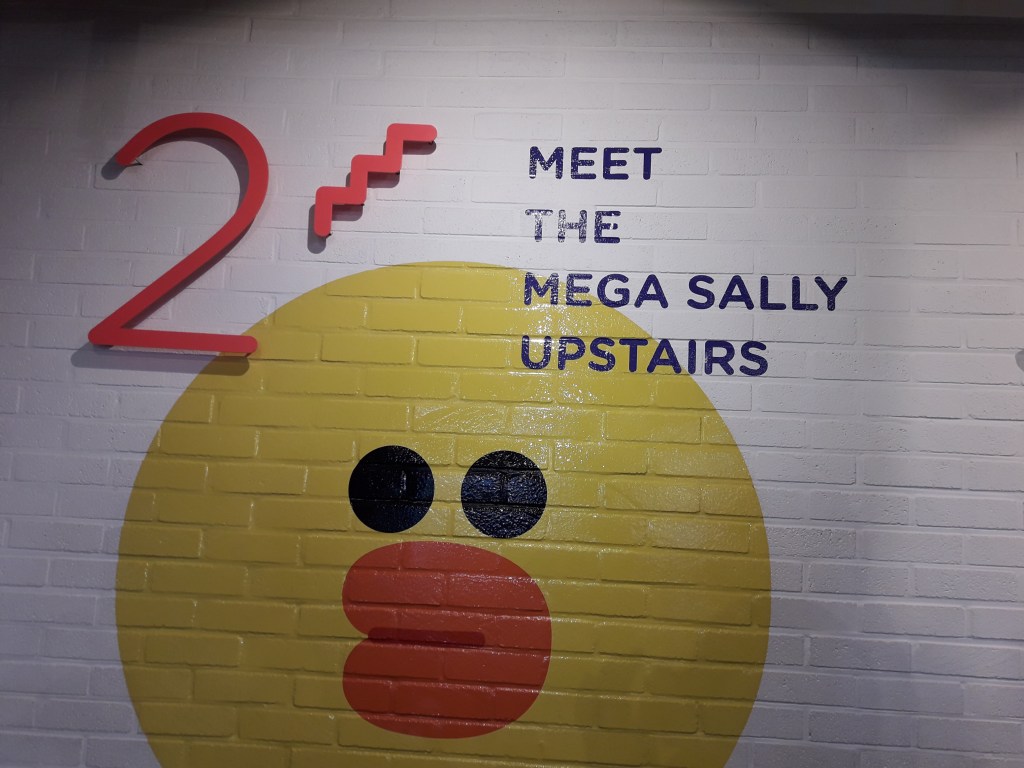
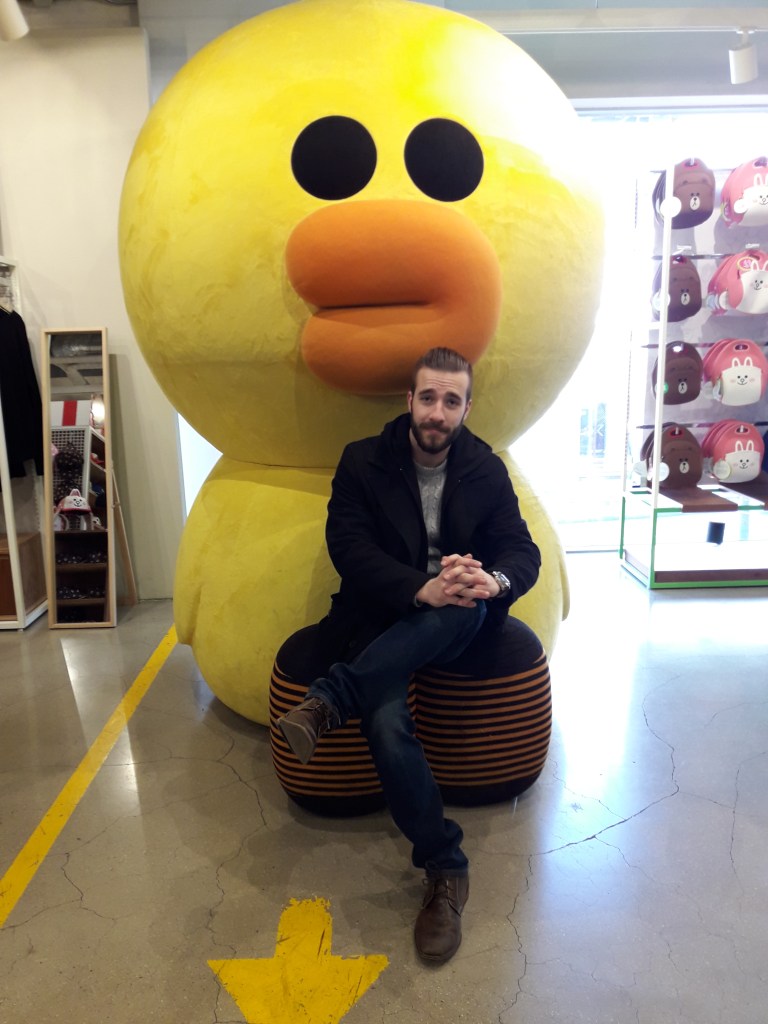
Who, or what, is this enigmatic Mega Sally? The grandmaster boss battle of all things cute?

20170212_135113.jpg

I met the Mega Sally. She was actually pretty agreeable once I fought through the waves of duckling minions.

Courteous

My final observation about Korean society from a Western perspective – Korea is courteous in a way I never really experienced in the U.S. Due to a language and culture that developed around a rigid social hierarchy and levels of respect, Koreans are very attuned to politeness in public. It’s intangible, but there’s a sense of a whole society working together for a common purpose that’s absent in the individualism of America.

Everywhere I go, I feel authentically attended to by service professionals. This goes beyond the faux, overdone service personalities, or even outright rudeness we often find in American establishments. I get the sense that everyone takes pride in their job, no matter what it may be, and makes it an utmost priority to treat guests and customers with respect.

In addition, I run into more people who are happy to talk with me and greet me warmly wherever I go. I mostly ascribe this to the fact that I am an English speaker, and English happens to be a well-regarded language in Korea. I know I benefit from this bias due to no conscious effort on my own, but I have to admit it’s nice. People compliment me on even my most rudimentary Korean, while apologizing for even their slight hesitations in speaking courteous, clear English. It really puts in perspective how lucky I am to know English as a first language.

Finally, the sense of safety in public here is so prevalent that I hardly even notice it anymore. Crime rates are impressively low in Korea (partly due to the vast network of CCTVS covering public spaces). Still, the level of ease I feel out in public is unparalleled. There is an utmost respect for personal belongings. I can leave my coat or bag on a chair in a restaurant and know that it’s as safe as if I were back on my college campus, where the whole student body followed an honor code. To serve as an example, I once left my scarf at a piano studio and didn’t realize it for a while. When I went back a week later, as soon as I walked in the door, one of the employees greeted me and offered me my coat, which had been neatly folded and placed on a shelf.

Summing Up

When I first arrived, I couldn’t get over how efficient, sleek, and courteous Korea was. Three months in, I strive to consciously remind myself of these qualities, so I never take for granted the blessings in my current home.

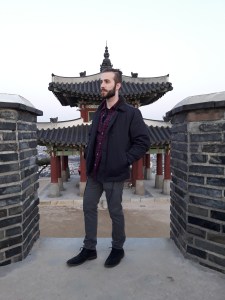
20170226_182618.jpg
Bonus pic – me at a temple on top of a mountain